Showing posts with label instructional methods. Show all posts

Wednesday, January 1, 2020

New Year, New Habits: 8 Tips to have a Great Start Getting Back to School!

                                             Happy New Year everyone!

Exhausted teachers and punchy students: a perfect recipe for winter break. While everyone’s looking forward to a few weeks’ respites from teaching, grading and classroom crowd control, now is a good time to set goals for the new year. Here are five tips for teachers to remember in the new year:

Plan a January reboot

While the beginning of a school year is an essential time for establishing classroom rules and expectations, returning from the long winter break provides another chance to help students be good citizens of the classroom. Reviewing academic and behavioral expectations can help everyone refocus for the last half of the school year.
This time also provides an opportunity to reset bad habits if students were starting to slip before the break. Gently modeling classroom rules can get everyone back on track for the new year. Rewarding students who are well-behaved helps ensure that everyone understands your expectations.

Help students find new study habits

Students may need help rebooting their out-of-class behavior as well. By winter break, they have received semester and trimester grades, and they may return with new study skills or better grades in mind.
Reviewing the importance of active reading, effective note-taking, studying, and completing homework in a timely manner will help students refocus on their academics in the new year. Some students might not even know they need help in these areas. Often we give them homework or expect them to study without training them in how to do so effectively. A short January session on soft skills may be exactly what they need to improve their performance moving forward.

Start note-taking for next year

If you don’t already keep a teaching journal, now is the time to start. After each day’s lessons, take a few minutes to reflect on what worked, what did not work, and why. If students had unusual or surprising questions, record them as well.
These notes will be essential in creating next year’s lesson plans. Even if you don’t plan to teach the course in the following school year, keeping such notes is an ideal way to record the work you do as an instructor and ensure your best lessons are not lost to time.

Set professional development goals

Teaching is a dynamic career that requires professional development and continuing education. While some professional development is institutionally driven, you owe it to yourself to look outside of school to pursue personal research, continuing education, and participation in professional organizations.
Sit down in January and consider your personal goals, including short-, medium- and long-term achievements. If concurrent enrollment or a part-time professorship is among the goals, consider finding continuing education opportunities that align with your immediate licensing requirements and long-term priorities.
While they may not count toward credit for professional development, finding online communities or connections through social media and Tweetchats can provide ideas and support, often making curriculum and assignment development easier. Consider broadening your professional connections to your short-, medium- or long-range goals.


Strive for more balance

One of the biggest issues of the teaching profession is maintaining work-life balance. This is key to maintaining a long and healthy career. During your note-taking and professional development goal-making, consider also setting healthy limits to your at-home grading and planning time, and brainstorm ways to make teaching a more manageable career.
A short writing assignment can be as challenging or more so than a long one, and answering one or two questions for thoughtfully created student homework still requires students to engage content outside of the classroom in a meaningful way — but both reduce grading workload.
Whatever habits you strive to set, January is a perfect time to examine practices, both student and personal, and adopt some school New Year’s resolutions. Despite being in the middle of a school year, the long break and new calendar year provide the perfect time for a reboot.

Try to make time for your friends and family, because they're the ones who will keep you sane when work gets overwhelming. Make sure to try that exercise class, join that book club, and embrace all the things that keep you happy. Happy teachers make for happy classrooms!


Clean Up!

If you're anything like me, you're organized, yet working in conditions of almost-chaos at the same time. Yes, I generally know where the materials I need are located, but I may have to dig through a pile of student work, intervention resources, and curriculum guides to get them.
I try to leave work on Friday afternoons with a clean desk because it helps me feel ready to begin the week when I come back in on Monday morning. One of my own personal New Year's teaching resolutions is to keep my desk and materials organized. While realistically I know this will be a challenge for me, I believe being more mindful will help!


Have Fun

As you frantically work to get through 100% of your curriculum within the allotted time period, remember that the days you let social studies slide in favor of some independent reading time, group activity, or a fun craft are the days your kiddos will remember.
When I think back to my own time in fourth grade, I remember going to the school store, doing extra credit assignments, the boundless energy of my math teacher, and playing tetherball at recess. I have no idea what the standards were or what my grades on pre- and post-assessments looked like.
I remember the fun. Your kids will too.


Be Realistic

As beautiful and grand as New Year's resolutions tend to be, they are also easily left by the wayside. If you don't miraculously have a clean and organized desk on February 1, if you sometimes forget to prepare for that small group, if you don't do all of the things you pressure yourself to do, it'll be okay.
We all love our kids, and that driving factor truly is the most important thing.
Monday, December 2, 2019

Ways to Check Students Understanding

The ultimate goal of teaching is to do just that – teach, not stand up in the front of the room and talk. But sometimes it’s easier to talk than to teach, as we all know, especially when we need to cover a lot of material in a short amount of time. We hope students will understand, if not now then before test time, and we keep our fingers crossed that their results will indicate we’ve done our job.
The problem is, we rely on these tests to measure understanding, and then we move on. Few of us take the time to address weaknesses and misunderstandings after the tests have been graded, and by that time it’s too late for students to be interested. This means we need to rethink how we approach assessment during class.
The most effective way to test student understanding is to do it while the lesson’s still going on. Asking students to fill out a questionnaire and then correcting misunderstandings during the next class period won’t work because students have already moved on. You’ve got to take advantage of the moment. If you hope to spend the majority of your time getting through to students, and not just talking, then understanding must be measured and dealt with as soon as the first frown appears on a face.
Here are a few in-class tips to get you started:

Give them a Yes/No question.

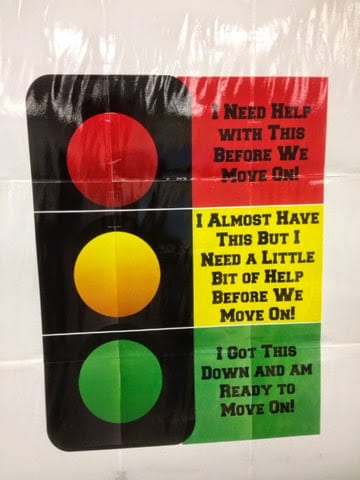
Check for understanding by asking students to flash a red piece of construction paper for no (they need a little more explanation) or a green piece of construction paper for yes (they get it and are ready to move on).  Alternatively, laminate squares of red and green construction paper and glue them back to back to large popsicle sticks to make paddles for your students to show.  So, of course, it’s surprising when several students later admit that they’re lost. To help students grasp ideas in class, ask pointed questions that require students to use their own prior knowledge.

Ask students to reflect.

During the last five minutes of class ask students to reflect on the lesson and write down what they’ve learned. Then, ask them to consider how they would apply this concept or skill in a practical setting.

Use quizzes.

Give a short quiz at the end of class to check for comprehension.

Ask students to summarize.

Have students summarize or paraphrase important concepts and lessons. This can be done orally, visually, or otherwise.

Hand signals.

Hand signals can be used to rate or indicate students’ understanding of content. Students can show anywhere from five fingers to signal maximum understanding to one finger to signal minimal understanding. This strategy requires engagement by all students and allows the teacher to check for understanding within a large group.

Response cards.

Index cards, signs, whiteboards, magnetic boards, or other items are simultaneously held up by all students in class to indicate their response to a question or problem presented by the teacher. Using response devices, the teacher can easily note the responses of individual students while teaching the whole group.

Four corners.

A quick and easy snapshot of student understanding, Four Corners provides an opportunity for student movement while permitting the teacher to monitor and assess understanding. The teacher poses a question or makes a statement. Students then move to the appropriate corner of the classroom to indicate their response to the prompt. For example, the corner choices might include “I strongly agree,” “I strongly disagree,” “I agree somewhat,” and “I’m not sure.”

Think-pair-share.

Students take a few minutes to think about the question or prompt. Next, they pair with a designated partner to compare thoughts before sharing with the whole class.

Choral reading.

Students mark text to identify a particular concept and chime in, reading the marked text aloud in unison with the teacher. This strategy helps students develop fluency; differentiate between the reading of statements and questions; and practice phrasing, pacing, and reading dialogue.

One question quiz.

Ask a single focused question with a specific goal that can be answered within a minute or two. You can quickly scan the written responses to assess student understanding.

Socratic seminar.

Students ask questions of one another about an essential question, topic, or selected text. The questions initiate a conversation that continues with a series of responses and additional questions. Students learn to formulate questions that address issues to facilitate their own discussion and arrive at a new understanding.

3-2-1.

Students consider what they have learned by responding to the following prompt at the end of the lesson: 3) things they learned from your lesson; 2) things they want to know more about; and 1) questions they have. The prompt stimulates student reflection on the lesson and helps to process the learning.

Ticket out the door.

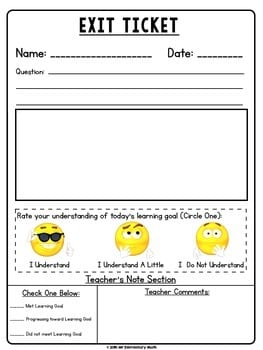
Students write in response to a specific prompt for a short period of time. Teachers collect their responses as a “ticket out the door” to check for students’ understanding of a concept taught. This exercise quickly generates multiple ideas that could be turned into longer pieces of writing at a later time.


Download this cute freebie to create these exit tickets. Students can write the question of the day at the top and turn in their responses on the way out.

Journal reflections.

Students write their reflections on a lesson, such as what they learned, what caused them difficulty, strategies they found helpful, or other lesson-related topics. Students can reflect on and process lessons. By reading student journals, teachers can identify class and individual misconceptions and successes.

Formative pencil–paper assessment.

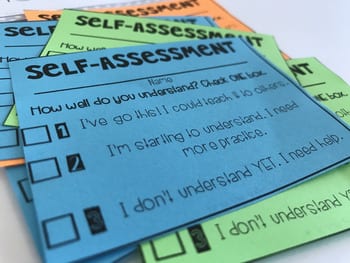
Students respond individually to short, pencil–paper formative assessments of skills and knowledge taught in the lesson. Teachers may elect to have students self-correct. The teacher collects assessment results to monitor individual student progress and to inform future instruction. Both student and teacher can quickly assess whether the student acquired the intended knowledge and skills. This is a formative assessment, so a grade is not the intended purpose.


Download this free resource and print up a stack of them in different colors for different subjects. Pass them out as exit tickets to plan for the next lesson period. 

Misconception check.

Present students with common or predictable misconceptions about a concept you’re covering. Ask them whether they agree or disagree and to explain why.

Analogy prompt.

Periodically, present students with an analogy prompt: “the concept being covered is like ____ because ____.”

Practice frequency.

Check for understanding at least three times a lesson, minimum.

Use variety.

Teachers should use enough different individual and whole group techniques to check understanding that they accurately know what all students know. More than likely, this means during a single class the same technique should not be repeated.

Make it useful.

The true test is whether or not you can adjust your course or continue as planned based on the information received in each check. Do you need to stop and start over? Pull a few students aside for three minutes to re-teach? Or move on?

Peer instruction.

Perhaps the most accurate way to check for understanding is to have one student try to teach another student what she’s learned. If she can do that successfully, it’s clear she understood your lesson.

Give a thumbs up/ thumbs down.

Sometimes all it takes is a quick thumbs up or thumbs down to make sure your students are all still on board. Stop frequently to check-in and have your students hold them up high so you can take account. 

Do a Quick Write.

Ask just one question and have students jot a quick paragraph on index cards to show that they understand. Have them share their answers with a partner or collect the cards to review for the next day. 

Post your name on the stop sign.

This teacher blogger asks students to check for understanding by writing their name on a post-it, then attaching it to the stoplight on the appropriate color. She then groups students who need re-teaching and advises students who are ready to move on. 

Draw a T-chart.

Ask your students to tell you five (or whatever number you think is sufficient) things they learned from the lesson. Have them make a T-chart and on the left hand side write a fact or opinion, and on the right side give evidence to support their fact or opinion. 

Display mini flip charts. 

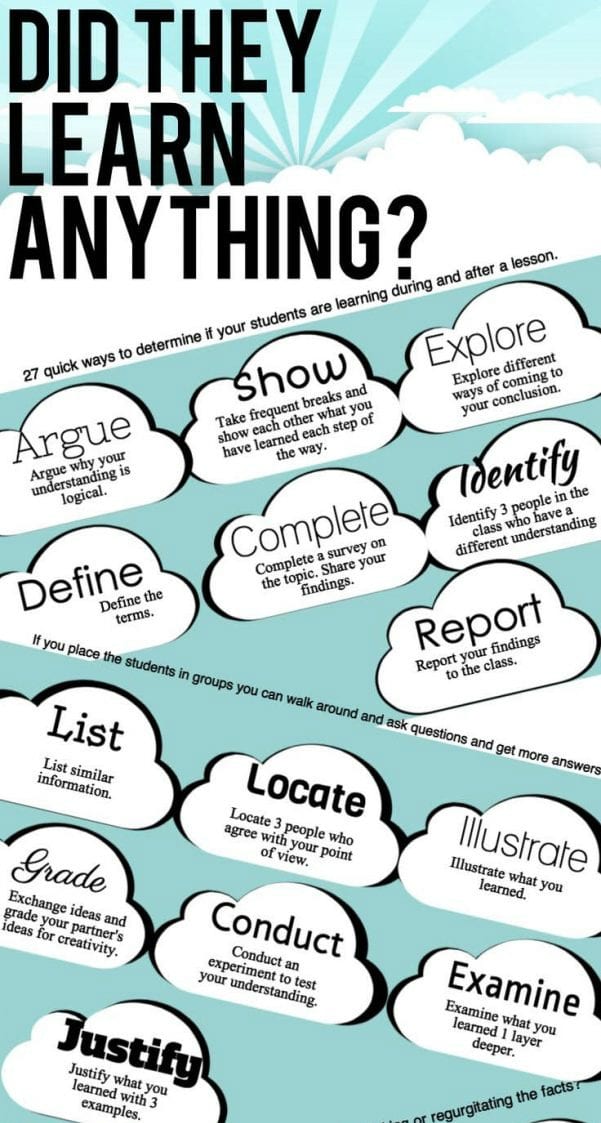
Reference this chart. 

SOURCE: Mia MacMeekin
This amazing infographic shows all kinds of imaginative ways to check for understanding. Print out a copy and display in your classroom for inspiration. 

Thursday, June 20, 2019

WBT & Differentiated Instruction

Differentiated instruction, whole brain teaching, manitoba curriculum

Dr. Carol Tomlinson


First of all, I wanted to address the WBT website has so many amazing strategies and resources that I will be able to highlight different ones on the WBT Series for quite some time. Thank you to everyone that checked out the posts and, as always, I look forward to your opinions and stories on these strategies.

Today I'm going to talk about Differentiated Instruction by Carol Tomlinson, (view her website here). We talk about Differentiated Instruction in every single one of our education classes. If you are not familiar with this topic, it centers on the idea that every classroom is going to have students that represent a broad spectrum of learners and, as teachers, we must plan for these differences. We need to keep in mind that our students are going to be coming into our classrooms with different ability levels, different learning styles, different backgrounds, etc. and we need to tailor our classroom to best accommodate all of our students.

One teacher that I saw in their classroom who had three different types of assignments/tests/projects that he provided for his students. There was the "straight-ahead" option (the easiest level), the "uphill" option (intermediate level) and the "mountainous" option (the most challenging level). The names for the levels were chosen with consideration as they are all meant to imply a step-forward in the learning process. Through conferencing and open communication, the students knew exactly what level they should be working at and they would pick the appropriate assignment. Although each level was tailored to a different ability level, they all focused on the same curricular outcomes which still allowed for group discussion within the classroom. It worked wonderfully!

This got me thinking about if some of the WBT strategies could fit into a classroom that is practicing Differentiated Instruction. A textbook that I found "Success for all Learners: A Handbook on Differentiating Instruction", put out by Manitoba Education and Training, a handy chart is provided that overviews what "A Continuum Towards Differentiated Instruction" looks like. The following will summarize areas of the chart and include my opinions about how WBT strategies* may fit into this model.

Culture & Climate
Traditionally, "learning is associated with silence".
Through Differentiated Instruction, "learning is associated with on-task student activities".
- Well we all know that WBT is definitely anything but silent! In my classrooms
  I encourage participation in WBT strategies such as "Class-Yes" (see last
  Wednesday's post) which is far from silent but still an on-task student activity.
  I think that by encouraging student's to share their information and discuss
  topics together they will be more comfortable in your classroom which leads
  to the development of a positive learning environment.

Ways of Learning & Demonstrating Learning
Traditionally, "teachers present new information through lectures and reading".
Through Differentiated Instruction, "teachers use a variety of instructional modes including music, demonstrations and kinesthetic activities".
- The possibilities with this one are endless! As far as I am concerned, it is a given that
  I will have some sort of visual to go along with my lessons but after that, I believe that
  a teacher's only major restriction is their creativity level. What really stood out for me
  with this one was the demonstrations and kinesthetic activities. Many WBT strategies
  incorporate visuals referred to as "Power Pix" that a teacher uses kinesthetic
  gestures and demonstrations to explain so I think that this is a great match.

Instructional Methods
Traditionally, "students are passive".
Through Differentiated instruction, "students are active".
- I think WBT allows for students to be incredibly active! In "Teach-Ok" students are
  continually engaged and participating in the lesson. It also allows for them to develop
  an awareness of their meta-cognition process because by having to "teach" material
  to their neighbor, they develop an awareness of how much of the material they
  understand. Teachers can then use this awareness when holding teacher-student
  conferences to help understand the student's individual style of learning.

Assessment
Traditionally, "assessment happens at the end of a unit or course".
Through Differentiated Instruction, "assessment is ongoing".
- Yay for formative assessment! I think that this is something that teachers can do
   in many different ways. Remember, your only restriction is creativity. When using
   "Teach-Ok" teachers circulate around the room as their students work as teams
   to review material. This is a perfect opportunity to assess if your students have
   understood the lesson or not. As this assessment occurs, teachers can then plan
   accordingly to either spend more time on the topic or move onto something a
   bit more challenging.

Classroom Configuration
Traditionally, "desks are arranged in rows facing the teacher".
Through Differentiated Instruction, "desks or tables are rearranged as needed to facilitate working groups and student interaction".
- I am a HUGE fan of moving around desks and tables.
  WBT incorporates a lot of group work amongst students and encourages
  discussions with peers so I would move around the desks into partner groupings
  or larger groups (up to 4 or 5) depending on the activity.

Through this summary, I am comfortable saying that I will be able to use Differentiated Instruction in my classroom and still be able to incorporate elements of the WBT strategies. In my eyes, they almost seemed to naturally go together anyways!

* I tried to focus on the strategy of "Teach-Ok".
(1996). Success for all learners: A handbook on differentiating instruction (1.12). Manitoba: Manitoba Education & Training.