Showing posts with label first steps. Show all posts

Friday, May 22, 2020

First Year Teacher Series- Setting Up Your Classroom

Today is our first First Year Teacher Series, a special post dedicated to highlighting a specific teacher tip strategy in more detail than I do during some of my regular posts. To kick off the FYT Series I would like to start with "Setting Up Your Classroom". How spacious, attractive, a modern classroom, portable, or even a pod that you will get the keys to is out of your hands, but what you do turn it into is in your control. While you are setting up and arranging things around you will need to think about the furniture and materials.
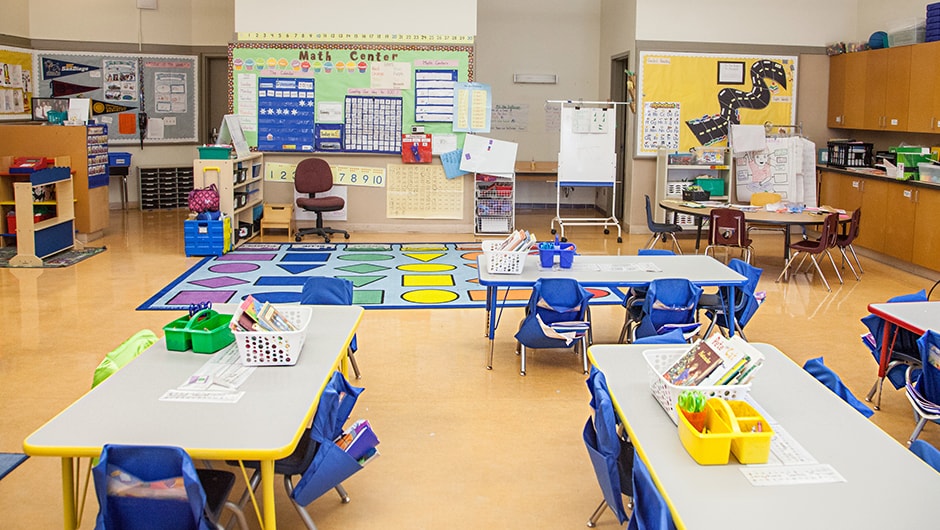
How to Set Up Your Classroom Without Breaking the Bank | Teach For ...

Furniture

With furniture, it is important to focus on classroom order and functionality. Many of these issues in the classroom start with furniture. Before setting up the furniture think about these questions. How many students will I have? Do I have enough desks or tables? What furniture arrangement will be successful from day 1? Let's look at two scenarios. 

A science teacher was placed in one of the smallest classrooms in the school. This size limits the teacher's options on how to design the space. The best option is to start off with desks in evenly straight rows. This allows movement between the desks and limits student interaction. Once routines, procedures, and structure are in place the teacher can move desks into tables for students to collaborate. 

An elementary teacher has a large classroom so the teacher can design his vision. He groups the desks into 5 for whole class learning. Then he has a classroom library in the back corner. The elementary teacher classroom is different from the science teacher's classroom because his classroom, student's needs, and comfort level are different.

When setting up the furniture make sure to monitor all students at all times no matter if you are not teaching. For example, if you have a file cabinet or a reading nook these are places where students can be hidden and take advantage of.


Materials

The last aspect of a classroom setup is the organization of materials. Make sure regularly used items are easily accessible while less frequented used materials are stored away when the time comes. What are things that students need on a regular basis? Pencils, Notebooks, Textbooks anything else? What are some things that students don't need as much? Scissors, glue sticks, Binders? Here are a few ideas if you still need help. 

A 3rd grade teacher made sure each student had a whiteboard and a clipboard in a seat pocket because those materials were going to be used regularly. Then the teacher placed the binders in the cubbies because they were going to be used rarely. The teacher also placed the notebooks into the cubbies because she has unsure if she would use them. 

A high school teacher knew students would have a notebook for the first day but he had extra in case. He also had a cup of pencils on his desks if they needed one but also had a sign-out sheet to make sure the pencils were returned. In a cabinet, he stacked textbooks by class and in order so he would hand them out. By planning ahead this minimizes the time worrying about other things than students and teaching. This also increases success when school starts.

Friday, April 10, 2020

♡ Teacher Life Q & A- Part 1 | My Career, First Steps, Student Teaching, Lesson Plans, and Classroom Management

Hi everyone welcome back! Today I am going to do a Q&A that I've been wanting for a while. I was hoping when I requested questions from you guys that I would get like a dozen or so questions. I got a lot of questions! I've decided to break these up. This post will be part one and the next will be a part two. The reason why I decided this so I can really take the time to answer the questions that you guys asked me. I will be answering eight questions. With that let's go on ahead and get started!


What do you include in your lesson plans and when do I usually do my lesson planning?

As far as what you have to put in your written lesson plans. You have to have your objective or your learning target. Then your strategy of how are you going to achieve your learning target. You have to have your assessment. How are you going to assess what you just taught the students? The assessments can be an exit slip, observation, and anecdotal records. Basically any kind of assessment. It's good to even be an informal assessment. Which is you're just watching the class and seeing how they react to the lesson. The last thing we have to put in there is the Common Core standard.  

As for when do I write my lesson plans. Sometimes I can get my lesson plans written when I'm in the classroom either on a prep period or in the morning before school actually begins. I like to go to work about an hour early so this way I have this extra time in my room to do whatever it is I need to do. But I will say the bulk of my lesson plan writing does get done at home it's just easier for me. I do them in the evening when I'm watching TV.  Also, even if I wanted to do long-term planning or if I really want to develop like a thematic unit for a week or two. I will even spend a Saturday or a Sunday sitting down and really focusing on how I'm going to tie all the subjects together.


How do I grade papers?

I have a variety of ways of grading papers. One of the good old-fashioned ways is just doing percentages. There were these many questions and you got that many wrong which is this percent so this is your grade.  Some assignments that don't really work that way. For example, on an exit slip that you're using for your quick assessment, you want to give the students to make sure they were paying attention. If you only have five questions one wrong is a B, two wrong is a D, three or more is an F. That's really harsh percentages. So what I would do is say that one wrong is a B, two wrong is to C three wrong is a D and then the rest would be an F. Make sure you adjust to meet the needs of you and your class. When it comes to entering the grades into the computer system, we do have to enter percentages.


What organizational systems do I have in the classroom to keep up with paperwork?


When it comes to all the paperwork, I will say grade as fast as you can. When you give a test and students start turning them in grade them immediately. So you can enter the grade and probably finish them all on that day. That is my biggest form of organization is just to get it done quickly. Then as far as the other paperwork goes writing RTI's for intervention students writing out your IEP stuff, writing out forms for interventions used with kids, and parent contact logs. My big strategy there is my planner and if I know that by this Friday I have to do this I will write it in my planner. If you don't have time to do the paperwork
 put it in your planner.


What kind of paperwork besides planning and grading do you take work home with you?

There's a lot of paperwork that is involved in teaching. If you have children who are struggling you have to write out what is called a referral for an intervention team meeting. These packets require a ton of information from the teacher and you have to record all their testing data so you have to fill out all those forms if you're referring a child for further interventions. If you have a behavior plan on a student you have to keep track of and to collect and store it in file folders. You have your form of testing you're doing you've got to store those tests and I then take all of the finished grades and put them on one sheet of paper in my pensive so this way I know what level all of my students are reading on.


Any tips for student teachers to help us have a successful experience?

For student teachers, my advice to you is one be prepared to work hard because not only are you student teaching to learn your own teaching skills but you want to view your student teaching as a time to network. You are meeting principals, you are potential co-workers, you are feeling out the district just as the district is feeling out you. I know a lot of schools require you to have more than one student teaching, there's your pre-student teaching and then your formal student teaching. Do that in two different school districts just so that you get your name out there. 


Next, arrive early and stay late. You want them to see you that you're there or you're available. If they're having an after-school program be prepared to stay at the after-school 

program. If they're having a curriculum meeting go to it. This is your opportunity to learn about every aspect of being a teacher not just what you have to do in the classroom. 

Also, the teacher in the classroom is your one-on-one resource. If you have questions ask that classroom teacher what to do or what would they do in your place. Also your lesson planning you're probably going to have a much more detailed lesson plan as a student 
teacher then you will as you know a permanent teacher. So for a student teacher an Erin Condren teacher planner probably would not work for you will need enough room in the boxes to write in all those extra details. I would actually recommend making like a template on a computer and using like font eight or nine where you can get in what manipulatives are going to be used what specific homework is going into this lesson plan. Make sure to be nice, be professional, dress appropriately, and work hard.


Could you give an overview of your classroom management system and do use a particular program?


We have in the district PBS which was called positive behavior support I loved that program. There were three general rules be safe, be responsible, and be respectful. Those three rules encompass a lot of behavior. For example, keeping your hands and feet to yourself as part of these safe. Completing and turning your homework on time as part of being responsible. Raising your hand and using a polite voice in class as part of being respectful. As long as you have those rules on your rule list you're covered for a lot of behaviors. That you're going to deal with in the course of the day. so that's my rules right there those for perfect. PBS is about bribery. If the kids are good for a week they get a treat. If the kids are good for a month they got a celebration party. I like being able to acknowledge that you were good this whole month. It's a very good and beneficial program and it works.


Is it expected that I will spend so much money on supplies and 
does my school provide anything?
 
My district does provide materials, furniture, and everything else. But during summer vacation, I like to monitor all the school supplies sales and I like to buy notebooks, folders with prongs, composition books, crayons, some markers, lots of pencil cap erasers, and pencils.  So when a student is out of something well I have a stash that I could now use. Also, if I want the whole class to have a blue folder for math so this way math papers go in this folder and not in another folder. I do spend a ton of money on my classroom but I want to provide my students with the best possible quality materials.


What inspired you to become a teacher?

I have to say when I was in 12th grade I had all my credits done already and I had two periods of like free time but I couldn't leave the building. So I really didn't want to take a study hall I talked to my counselor and said: "What can I do instead of study hall because I don't need it." So they had me go to a connected elementary and for one period I was volunteering in the kindergarten class and for the second period I was volunteering in the second grade classroom and I loved it!  The teachers would have me help them put up their bulletin boards and grade papers and putting stickers and stamps all over them which was fun! They would have me work one-on-one with the kids practicing their sight and spelling words and read to the children. By the end of 12th grade, I knew exactly what I was going to college for and what I was going to be with the rest of my life. I was going to be a teacher!

 My Advice:

If you're someone right now that you're in high school and you don't really know what to do or you don't know if you want to be a teacher volunteer.  Volunteer in a preschool or for assorted grade levels during summer vacation and see if working and being with children is something you really love and enjoy. It's very easy to figure out if you want to do this for a living.


Okay and with that, if you have any other questions you can ask them in the comments and I'll get to those in the next Q&A.

Thanks for reading,


Monday, July 29, 2019

What to do on the first day of school of using Whole Brain Teaching?


The hardest part of any journey is the first step. The same is true for implementing any new technique or strategy in your classroom. Change is hard. The unknown can be scary. But there's no reward for those risks not taken. So... if you are thinking of using WBT in your classroom next year...make the decision to JUST DO IT! :) The community of Whole Brain Teachers around the world is the most supportive and helpful group of people that I have ever had the pleasure of working with. There are hundreds of resources available at your fingertips, and many people are available to answer your questions (and hold your hand if needed) along the way.

When I decided to start using WBT techniques in my classroom, it wasn't a hard decision. After watching hours of YouTube videos and downloading as many free eBooks from the website as I could...I knew I had to start using the strategies right away. It wasn't a choice. It was a calling. I know that now. But, to be truly transparent, you need to know that I embrace change. I love trying new things and am constantly modifying what I do in my classroom. I've never taught the same lesson in the same way twice. Change is relatively easy for me. For many, that's not the case. Whether you embrace change or run screaming from it, my hope is that this post will help you feel more prepared and confident to walk into your first day of school.

And I've recently learned that some schools start the new school year in July and September! That's crazy. But that's off-topic. :)

Back to our original question...What should you do on your first day of using WBT? This post is written for those that teach class periods or blocks or different students throughout the day. If that's you...keep reading. And, even if you have one group of kids all day, you may find some helpful tips below. Please leave a comment after you're finished reading, I love the feedback!


Greet your students in the hall. (5 minutes)
This may sound strange, but doing this immediately lets your students know that there's something a little different about your classroom. Have them line up outside your door.

When the bell rings, start by saying, "Please look at me." It sounds funny, but what will happen is you will get a few more kids looking at you who weren't previously, and it sets the tone that you are in control of the environment.

Next, you are going to welcome them and quickly introduce yourself.. Say something like, "I'm so excited to meet all of you today. I'm Ms. P, and I'll be your teacher for the year."

Finally, you are going to teach them the class yes. You can say, "We will be doing a lot of moving and talking in class this year, and I need to be able to get your attention very quickly. To do that, we use something called the 'class yes'. When I say class, you say yes. Class! (a few of your students will say yes). Good. Now however I say class, that's how you say yes. If I say "Class Class!" then you say...(a few of your students will say "Yes Yes!'" You can try a couple varieties of class yes, and praise your students for their attention.

Now your students are ready to enter your room. Give them directions as to how they are to find their seats. I prefer to have a seating chart posted on my SMARTboard, and ask that students use that to find their assigned seat. While they are doing this, I take careful observations of who are the leaders, the followers, the clowns, the shy ones, and the clueless.  Yup, I said the clueless students. You know you've got some. We love them anyway. :)


Learn everyone's name. (10 minutes)
The best, most extraordinary way that I've found to learn students' names is called The Name Game. It's very simple. Tell the kids that you need their help to learn everyone's name. As you point to a kid, they tell you their name. Point to a kid, "Johnny". Point to a kid, "Sue". Point to a kid, "James". Then you repeat the names, in order, two or three times, while you point to them. (Johnny, Sue, James, Johnny, Sue. James." Then the whole class says the names together. "Johnny, Sue, James."

Now you go on to the next three kids. Point to them, one at a time, and they each say their names. Then, go back to Johnny, and say all of the kids' names in order two or three times. Then the class says all of the names in order with you.

Repeat this until you've gotten through the whole class. Don't forget to call a Class Yes if they start having too much fun and losing control. Reign them back in with the Class Yes.

Now, here's the magic: If you forget a name, ask the class 'Who is this?" And then say, "You got it, great job!" Even if you know the kid's name, you can still use this trick. The point here is not to just learn the names yourself, but to engage your students into learning each other's names as well. Don't be afraid to make a mistake - this is your chance to show your kids that you are human and that you know how to laugh! There should be a lot of laughing and fun in the game. And it really does work! The next day I silently play the game again to myself while they are working on something. I repeat that every day for a few days, and usually within the week I know all kids names. Even when they change clothes. Even in the hallway. Oh yeah.


 Slowly introduce Teach OK. (5 minutes)
Getting buy in on this is absolutely critical. So a slow entrance works best. First, you want to sprinkle in moments, right from the start of class, where you have the kids say things to each other. For example, when you are giving directions for the Name Game (above), you could say something like, "I need your help to learn everybody's names. I want to have all of your names memorized in the next ten minutes. Tell your neighbor, "She can't do it!" Well, let's see if I can!"

Do this several times, where you ask each kid to "Tell your neighbor..." Tell them exactly what you want them to say. You want to get them used to the fact that they won't be allowed to sit there and blend in. No one is under an invisibility cloak. This is a talking class, and everybody gets to talk. You're giving them the exact phrase to repeat so there's no fear of having to come up with something. You also want to have them say funny things to each other, which shows them that it's ok to laugh and have fun!

After you've had them tell their neighbor a few specific things, now it's time for them to "Tell your neighbor everything I just said." This next scaffolded step towards the teach ok gets them used to using their own words to repeat something you've said.  A great example is to list out everything they need to bring to class. You might say, "For this class, you will need to bring your folder, notebook, agenda, and pencil. Folder, notebook, agenda, and pencil." As you list these things out, use your "big counters". Hold four finger up with your left hand, then swing your right hand around in a big way to land on each finger of your left hand. When you say folder you swing your right hand around to the first finger on your left hand. When you say notebook you swing your right hand around to the second finger on your left hand, etc. Then say, "Now tell your neighbor, using your big counters, everything I just said."

Using big counters is a great way to get kids using gestures, which is the next step.


Introduce Mirror Words. (10 minutes)
Explain to the kids that when you say "Mirror Words", they say, "Mirror Words" and raise their hands ready to mirror your gestures. Then whatever you do and say, they do and say. More on how to keep kids engaged with Mirror Words (and get their buy-in). For now, you are just introducing it. You can do a silly mirror check, wave your arms around crazily, get them laughing as they follow you. It's important to practice using mirrors here, and with limited time in upper grades, the best practice is with something you need to tell them on that first day (like we did with the supplies in step 3). For me, I go right to the rules. I have them mirror me as I teach them all five rules.
Rule 1: Follow directions quickly (swim your right hand through the air like a fish swimming forward)
Rule 2: Raise your hand for permission to speak) raise your right hand, then make a talking motion with your hand)
Rule 3: Raise your hand for permission to leave your seat, aaahhhh (raise your right hand, then walk your two fingers through the air, then throw your right arm back into the air for the "aaahhh")
Rule 4: Make smart choices (use your right pointer finger to tap your temple three times)
Rule 5: Keep your dear teacher happy (make a picture frame underneath your face with both hands and smile!)
After I have shown them and had them mirror each rule, I'll ask them to TURN and tell their neighbor each of the rules over and over. Notice the continued scaffolding towards the teach okay. Earlier they said something to their neighbor, then they explained something to their neighbor, now I'm asking them to TURN and tell their neighbor OVER and OVER.


Teach the full Teach-Okay. (10 minutes)
Now you're ready to show them the entire Teach-Okay. Tell them that all class period long you've been asking them to talk with their partner and that in this class they will be talking more than you. In this class, they will get to talk almost the entire class period most days. That will get their attention.

Explain that you when you clap twice and say, "Teach!" they will clap twice and say "Okay". Have them practice this a few times.

Next explain that after they say Okay, they will do a full turn to their partner, shoulders facing shoulders. Have them practice this a few times. Get their attention back with a class yes. Now have them tell their partners that your Grandma moves faster than them. What was rule 1 again? Have them tell you with the gesture. And have them practice the teach Okay with full turn a few more times, faster.

Finally, show them that after their full turn, their arms should be up ready to gesture. Have them just practice the teach, okay, full turn, arms up to the routine a few times. Praise those groups loudly that are doing great. Say things like, "This side is doing great, I'm not so sure about that side over there." but be very vague about which side you're talking about. Be mysterious, it keeps them on their toes.

Now you're ready to use the Teach-Okay. Here's where I fit in all of the other stuff that I'm "supposed" to do on the first day. All of the administrative stuff that I am supposed to do can be given in short segments, using mirror words to highlight the key ideas, and followed up by a Teach okay. Before the first time, you'll need to say, "Now when I clap twice and say teach, you clap twice and say ok...then you're going to do a full turn, make big exciting gestures, and TEACH your neighbor over and over what I just said. Imagine that you are now the teacher, and you have to explain it to your partner. Keep explaining xyz (insert a reminder of whatever it is you just talk them), over and over, until I call you back with a class yes. 

DONE! IN 40 minutes, you've taught the class yes, mirror words, 5 rules, and Teach-Okay.

Disclaimer: It is YOUR classroom. Nothing in this post is meant to be absolute. It is an example of what you can get done in an upper-grade or an elementary classroom in 40 minutes on day 1. Every school and classroom is unique, so it's up to you to tweak these examples to fit your needs. If you have any trouble figuring out how to do that, please leave a comment; I'd love to help!

Next up...Day 2: the Scoreboard, complete sentence answers, and Brainies! Coming soon...

Tuesday, July 16, 2019

My To Do List

I am a list maker by nature, so in preparation for next year, the first thing I did was to sit down and make a list of everything related to WBT that I will need to or would like to accomplish before my students walk through the door on the first day of school.  I typed it as I wrote it, in no particular order.  Every time I complete something on the list, I will cross it off.  As you are planning for next year, I hope that you will find this list to be helpful to you.

1.  Make Scoreboard
2.  Runoff 5 rules and other signs
3.  Create Super Improvers Board
4.  Make Genius Ladder
5.  Create a bulletin board in which the "Brainies" are placed in a treemap
6.  Decide on writing focus skills and their order.  Then create editing sheets based upon these 
     skills for "paper clip" editing and create a small bulletin board to post them as they are taught.
7.  Buy enough red and green pens (for red/green writing) for every student to have one of 
     each
8.  Make Wacky Star Fun Button
9.  Make signs for Mind Soccer
10.  Make a list of questions for Mind Soccer
11.  Create sample test questions for Prove It
12.  Runoff materials for SuperSpeed Math game
13.  Runoff materials for SuperSpeed Reading game
14.  Create star homework board and thermometer
15.  Make star homework cover sheet and reading log
16.  Make language arts and math pics bulletin board
17.  Runoff and laminate all language arts and math pics
18.  Decide on classroom design
19.  Make a list of all the procedures I will use 3 peats for
20.  Decide which procedures I will play "Beat the Clock" with
21.  Study and learn all "Brainy" gestures, as well as any other commonly used gestures
22.  Prepare the rule practice cards
23.  Prepare a letter to parents for students to take home when they need to practice a rule
24.  Began putting together 5 step WBT lessons on standards being taught the first couple of 
       weeks of school
25.  Think about my daily schedule
26.  Decide how to plug all of the WBT writing components into my day
27.  Watch the WBT videos on the first hour and first day of school, and then plan my first day
28.  Learn more about all of the "Brain Toys" and decide on good places to use them
29.  Place SuperSpeed Grammar and SuperSpeed Rhymes on desktop
30.  Make a sign to post with oral writing pattern

I will be busy this summer getting all of these things done, but I still plan on taking some time off to relax and enjoy myself.  To be honest, because I am so excited about WBT, most of this list seems more like fun than work.  

As you were reading through this list, there were probably many things that you have questions about.  Remember, to find the answers you are looking for right away, you can always go to www.wholebrainteaching.com.  I will also be blogging in-depth about the items on this list throughout the summer and the school year.  I also promise that before the school year begins, I will show you what my finished classroom looks like.